
Home » Liberia Representation in FIFA Committees: Raji and Konneh Lead the Way
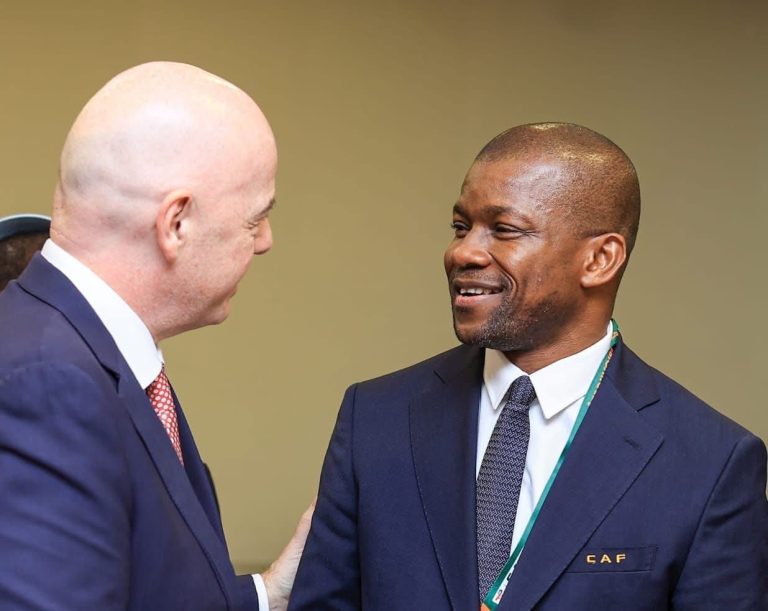
In Liberia, football is not simply a sport but a passion that unites communities and defines national pride. . That’s why the recent breakthrough in Liberia representation in FIFA committees has sparked so much excitement. For years, there has been a battle to get Liberia recognized at the global level in football matters, overshadowed too often by larger footballing nations like Nigeria, Ghana and the Ivory Coast.
Mustapha Raji and Roseline Konneh’s recent appointments to key FIFA positions have put Liberia in the spotlight. This is by no means simply a symbolic act but a chance to change completely the footballing future of Liberia.
The announcement was made at the FIFA Council meeting in Zurich. President of the Liberia Football Association, Mustapha Raji, was named Deputy Chairman of the FIFA Olympics Football Committee, which he will occupy from 2025 to 2029. At the same time Mrs Roseline Konneh is on the FIFA Women’s Football Development Standing Committee for the same period.
His appointment was not simply a coincidence. There had been a great deal of talk necessary from FIFA to its various member associations and confederations before the naming of the members on the new standing committees. The idea was to bring in new, fresh voices, improved technical ability, and a greater promotion of fair representation in the world.
FIFA President Gianni Infantino pointed out that these Standing Committees would serve the purpose of including a greater element of inclusiveness in campaigning around decisions to be taken. In particular, he drew attention to greater representation by women, a greater involvement of the smaller countries, and a greater technical aspect as well. For Liberia, the announcement was validation that the country’s football leadership was being taken seriously at the highest levels.
For several decades, Liberia has had little if any influence in the governance of FIFA. While George Weah put Liberia on the world map as a Ballon d’Or winner, it has rarely had administrators at the highest level of world football.
Other African countries like Egypt, South Africa and Morocco have long been important players within the corridors of power at FIFA. By contrast, Liberia has generally been on the outside. These new appointments fundamentally change that narrative.
Representation matters because it provides visibility. Smaller nations may have a place at the table as a result of which they can lobby for in respect of policies and funding which would directly benefit their respective footballing ecosystems. The inclusion of Liberia means that the country now has a voice in how tournaments are run, how resources are apportioned and how policies in global football are framed.
This change would assist Liberia in:
By itself representation will not solve Liberia’s problems overnight. The country is still hampered by:
This is where the real test comes. Can Liberia make representation from a symbolic sort into actual results? This will require good leadership at home, open and transparent dealing in the use of the resources etc. and continued pressure on FIFA to support developing football nations.
The rise in FIFA governance of Liberia is an example how it is the smaller nations that can achieve a far greater voice in leading the great sport when one stops to consider worldwide popularity.
To the fan, it is a matter of bigger dreams. To the administrator it is an example how they must deliver. Moreover, to the men and women players, it has proved that at last Liberia is being listened to.