
Home » African Players in European Football: Changing the Game
African Players in European Football. When the sun set on the small village of Bambali, Senegal, a child weaved between the makeshift goalposts-barefoot, unwavering, with a fire and impeccable energy coursing through him. The beaten-up ball tinged in blue and white seemed to respond to each flick of his foot like a co-creator. That child was Sadio Mané. Champions League winner, Premier League icon. But more importantly, the man is a quiet revolution that has changed an African soccer player’s image in international European football.
The new wave of players came before Salah, Drogba, and Mané. The pioneers included Roger Milla, George Weah, and Abedi Pele. The 1980s and 1990s introduced these three, among others, into their respective leagues. They made critical socio-political contributions or at least windows into their backgrounds that allowed them to ingrain themselves across Europe before Africa was known as a source of powerful international talent. They were the examples for many millions to follow, hoping to get a feel for the international game in cities and countries they only saw on television before.
In the 2011-12 PL season, for instance, only 27 registered African players were under contract. By 2021-22, that number skyrocketed to 61, a 127% increase. Serie A is up by 69%; La Liga, 67%; the Bundesliga, 114%. According to CIES Football Observatory, over 500 Africans are currently signed to top first-division teams in Europe.
Moreover, it’s not just presence. It’s about influence. In 2019-20, Riyad Mahrez-14 league goals; Samuel Chukwueze (8 league goals) for Villarreal in La Liga. These men do not sit on the bench; they are difference-makers.
As low as 2% to as high as 14% of goals attributed from African players from 2013/14 to 2020/21 for the Premier League in recent history. When it dropped to 8% in 2016/17, it was reactionary given destabilization in some African nations, but efforts increased; by 2017/18, Africans ranked higher than others per 90 minutes for goals and assists.
Transfer values gift the same notion. Liverpool bought Mané for €76 million in 2019. Barcelona signed Franck Kessié for €50 million. They aren’t only buying players. They’re buying efforts for stability.
Kalidou Koulibaly has been racially abused in Serie A repeatedly. And he’s not alone. Racism is a byproduct of social ills, and Europe has it all, too.
Beneath the elite level lies a darker system. Young, aspiring African men, some under 14, are promised contracts in Europe. Once they arrive, many of them find themselves stranded in the obscure world of European minor leagues. Human rights organizations believe a web of trafficking is expanding with those who fall victim to the dreams of a better future.
Even for successful players, isolation is common. Language issues, distance from families, and cultural misunderstandings negatively impact mental health.
Furthermore, the flow of African talent abroad creates a multilayered issue. The more Africans that leave Africa, the worse the leagues perform back home. The NPFL in Nigeria and GPL in Ghana suffer from talent and attendance when international superstars go elsewhere to play.
But with developing academies, like Right to Dream and Diambars in Senegal and Ghana, there is some stabilization. They develop players while focusing on education and ethics. Still, without broader support, Africa’s talents are destined to be relegated to export only.
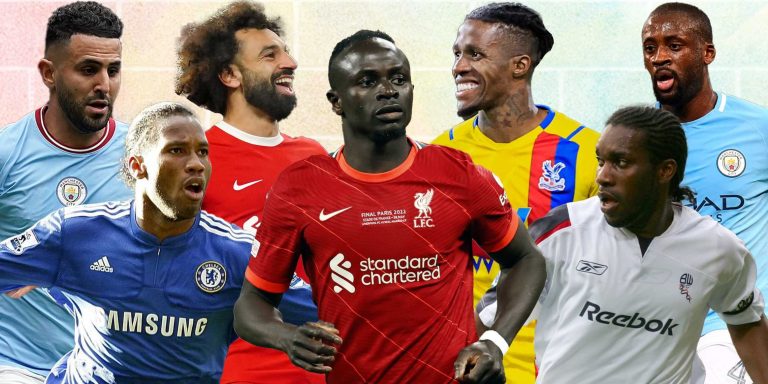
These men are just some of the few African Players in European Football who changed league games
Leagues in Europe now use tactics that mirror the advantages possessed by African players. Speed, agility, and athleticism help redefine positions across the field. More and more clubs explore scouting from Africa as a first-world entry point rather than an afterthought.
Fan culture is changing, too. Diaspora communities follow their stars passionately. A Mahrez goal echoes from Algiers to Marseille. A Mane assist echoes from Dakar to London.
The trajectory is upward, but fragile. Race issues, little player protection, and a struggling domestic league might freeze progress. European clubs must do better to provide psychological and social resources for young players. African federations must create systems to keep players on national territory and foster lasting leagues.
The subsequent generation is already here-Victor Osimhen, Wilfried Ndidi, Kamaldeen Sulemana. They are not creating legacies for contracts but for legacies.
Europe has lost its imperialist hold over football. In recent years, African imports have changed how the game is played, with opportunities for styles once unheard of. Yet their existence means more than just winning-they had to persevere from racial adversity to international issues like human trafficking and child abandonment.
Change is possible-through better scouting, fair treatment, and investment in African leagues. The Bambali child still might want to go to Europe and play. But maybe one day, Europe will want to come to Africa and play.