
Home » AFCON Disciplinary Investigation Clash: CAF Probes Heated Quarter-Final Incidents
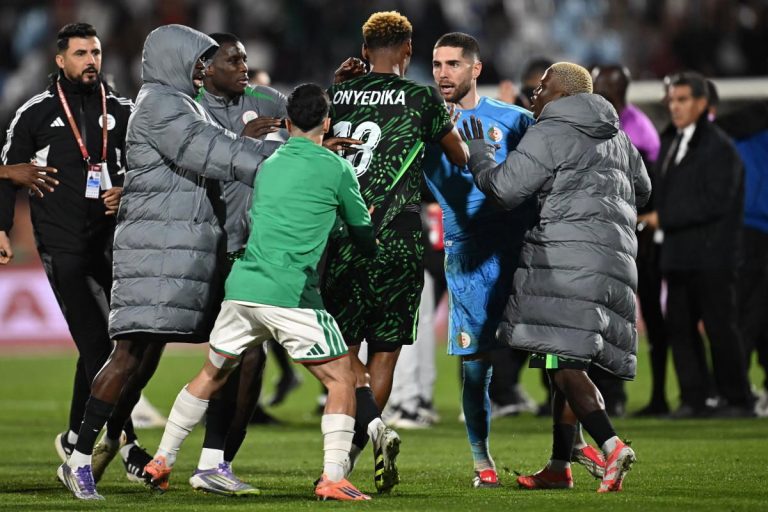
The AFCON Disciplinary Investigation Clash has quickly become one of the tournament’s most discussed storylines following a tense quarter-final conclusion. The Confederation of African Football (CAF) said within hours of the final whistle that it was opening a formal disciplinary investigation into post-match incidents.
The match provided drama and key goals, but the players conduct after the final whistle stole the spotlight. Now, fans and analysts are watching to see if CAF will respond as harshly. What happens after the AFCON match can be just as important, if not more so, than the 90 minutes.
The incident occurred at the end of the match in Marrakesh, where Nigeria had just secured a 2–0 quarter-final win over Algeria. The game was decided by second-half goals, but clashes started immediately after the final whistle.
It was a tight contest, but frustration mounted once the outcome became apparent. Some players got emotional, prompting officials to intervene early. Because broadcast cameras captured the scenes clearly, those images now form a central part of the disciplinary review.
Shortly after the incident, the Confederation of African Football released an official statement confirming the case had been referred to its disciplinary board. According to CAF, the board will examine match officials’ reports alongside available video footage. Sanctions may be imposed if the evidence shows improprieties took place.
The process of discipline usually involves the following steps:
Because CAF has codified its discipline system, its rulings typically align with previous trends. Still, timing often depends on severity, and knockout-stage pressure can accelerate outcomes.
In addition to the Algeria-Nigeria incident, CAF confirmed it is looking into another quarter-final match between Morocco and Cameroon. The game was won by Morocco 2–0, but with very strong protests from the Cameroonian side. A lot of it was directed at refereeing decisions, including a disputed penalty.
Because CAF often assesses tournament discipline holistically, it chose to examine both matches together. Even though the situations differ, each raises questions about behaviour under pressure. By doing so, CAF signals that all teams remain subject to the same standards.
As context from past AFCON tournaments offers, this is beneficial. Minor touchline or on-pitch incidents normally result in warnings and fines, rather than suspensions. More severe cases, however, have led to match bans even in the knockout stages.
Possible sanctions available to CAF include:
Historically, CAF aims for proportionate responses, especially when competition stakes are high. Still, the organisation also prioritises protecting the tournament’s image, which means strong action remains possible if lines were crossed.
Once the disciplinary board completes its review, CAF will communicate its decisions directly to the affected teams. Decisions are generally swift because of no scheduling conflicts. The details will all become clearer during the final.
In the meantime, coaching staff must project everything. Teams continue training as normal while planning contingencies for potential absences. For supporters, official CAF updates remain the only reliable guide as speculation circulates online.
The AFCON Disciplinary Investigation Clash shows how quickly tournament narratives can change. One heated moment after full-time now threatens to influence the closing stages of a continental competition. For Nigeria, maintaining focus becomes essential while disciplinary questions linger.
More broadly, the situation underlines CAF’s intent to enforce standards consistently across all matches. So the teams have been reminded, as AFCON progresses, that discipline doesn’t end at the final whistle. Sometimes what happens after the match can mean just as much as what took place during it.