
Home » Africa Cup Nations Politics: How Power, Identity, and Football Collide
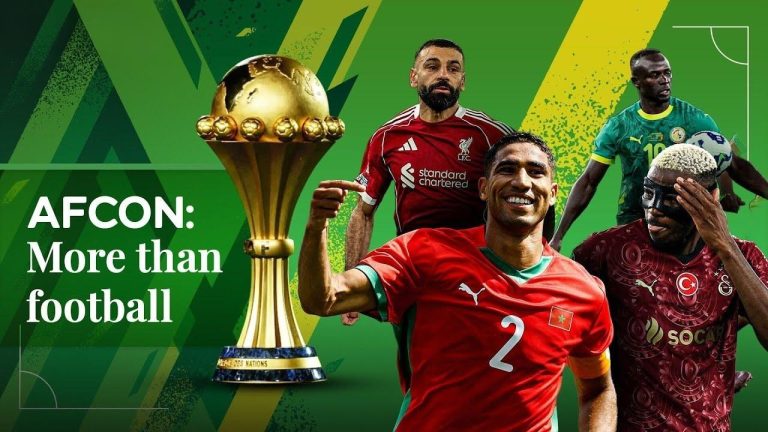
The phrase Africa Cup Nations Politics is not a metaphor or a trendy angle. It is the core of the tournament’s history. The Africa Cup of Nations has been about politics as much as football from its earliest days.
Fans might concentrate on goals and star players, but leaders often have treated the tournament as an opportunity to send political messages. From the start, football in Africa was symbolic. Independence battles, regional tensions, and diplomatic disputes unfolded on the field.
It’s one reason why AFCON has never operated separately from politics, and to disregard it is to miss the bigger picture.
One of the most dramatic examples came in 1965. On March 3, the Tunisian president, Habib Bourguiba, delivered a speech in Jericho demanding that peace be realistic and gradual. His comments outraged many of his regional counterparts and ignited a fierce backlash.
Then preparation for the Africa Cup of Nations was stalled. Egypt under Gamal Abdel Nasser reacted with anger and withdrew from the tournament. AFCON was thus caught in the middle of a broader political game. A football competition turned into a diplomatic weapon almost overnight.
This episode showed something crucial. Even when no player touched the ball, the tournament already carried political meaning. The absence of Egypt weakened the competition, but it strengthened AFCON’s reputation as a political battleground.
The Africa Cup of Nations was born out of the aspirations of newly independent nations. Countries newly independent from colonial rule wanted symbols that would feel immediate and visible. Football, with its mass appeal, offered exactly that.
In many nations, state legitimacy was fragile. Borders were new, institutions were weak, and national identity remained abstract. AFCON helped turn those abstract ideas into shared emotions. Winning and hosting or even merely competing meant something well beyond the field of play.
Because of this, Africa Cup Nations politics became intertwined with questions of sovereignty. Every match was a proclamation that the nation existed, that it belonged and that it deserved to be acknowledged on the global stage.
The first AFCON in 1957, in the Sudanese capital of Khartoum, was political from the beginning. It announced the creation of CAF – the Confederation of African Football – and was planned as something of a showcase for continental unity. Few countries took part, but the message was clear.
Pan-Africanism shaped early tournament rules. Players were expected to represent nations they actually lived in. European-based professionals were discouraged. The goal was clear: keep African talent at home and resist neo-colonial influence.
Ahead of that, the Africa Cup Nations politics tended to be solidary rather than rivalrous. The tournament was meant to demonstrate equality with Europe and pride in African identity. Football became a shared language for a continent in transition.
Few leaders embraced Africa Cup of Nations politics with more openness than Kwame Nkrumah. In football, he saw evidence that African talent could be the equal of any global superpower. He famously called the sport a weapon of dignity and self-belief.
Nkrumah established the Real Republicans, a state-funded team dedicated to supporting the national team. Domestic clubs were required to release their best players, with the government making all the decisions. Ghana won AFCON in 1963 and again in 1965.
On-pitch success was not considered only a sporting achievement. Every victory was taken as evidence that Nkrumah’s political vision was on track. Unity on the field meant unity in society, even if it wasn’t as simple as that.
In Zaire, the politics of the Africa Cup Nations became darker under Mobutu Sese Seko. Football became a tool of enforced nationalism. Players were renamed, symbols were rebranded, and the national team became a state institution.
Mobutu stopped young players from joining foreign clubs. Stars were summoned home from Europe and given luxury homes and benefits. Loyalty mattered more than freedom. Each triumph solidified the illusion of a powerful and united nation.
But below the surface, football was hiding repression and economic decline. The Leopards AFCON triumph of 1974 created pride, but it was also an illusion; it distracted from rising instability. Africa Cup Nations politics here served as a curtain, not a cure.
No leader used AFCON as a stage quite like Muammar Gaddafi. The hosting of the 1982 tournament would enable him to extend ideological leadership over Africa. Opening ceremonies turned into political rallies, and football became one with revolutionary messaging.
The tournament was for Gaddafi and his “Third Universal Theory”. Libya’s mission was cast in anti-imperialist terms and as proudly independent. Even the inevitable loss in the final was symbolic, since it still meant more to compete than win.
This edition marked a shift. While ideology still mattered, global football realities began to intrude. The old isolationist model no longer fit the modern game.
The 1982 AFCON symbolised a new political direction. CAF relaxed restrictions on the foreign-based players by permitting Europe-based professional footballers to play for their national teams. Quality improved, but ideology faded.
The transition was a consequence of the movement of populations and changes in economic practices. African stars became more and more common abroad. The absence of them meant the contest was weaker and less global.
Therefore, the politics of Africa Cup Nations became less about continent-wide solidarity and more about worldwide visibility. The tournament adjusted, even if it meant compromising early principles.
CAF also maintained for decades a severe apartheid South Africa boycott. That position defined its moral image, with football at the forefront of anti-racist ideals and continental unity.
Everything changed in 1996. The AFCON was also both hosted and won by a democratic South Africa. The image of a smiling Nelson Mandela handing the trophy to captain Neil Tovey would go on to become iconic and represent reconciliation and a new start.
That moment symbolized reconciliation and rebirth. Africa Cup Nations politics achieved something rare. Football helped express unity where politics alone struggled.
Modern AFCON looks different. Today sponsorship deals, broadcasting and a global audience are pivotal to decisions. Still, politics never left the tournament. Hosting rights, scheduling conflicts, and government involvement remain constant.
National teams still carry political meaning. Victories boost legitimacy. Failures spark debate. Even fan reactions often reflect deeper social tensions.
Because of that, Africa Cup Nations politics remain essential to understanding the competition. AFCON is not just football. It is history, power, and identity played out every two years.