
Home » F1’s Return to Africa: Kyalami’s Renaissance and the Race for Revival
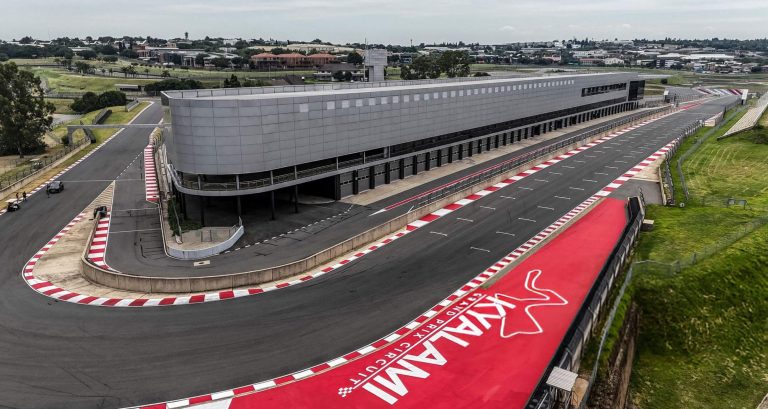
Fans of Formula 1 across the African continent have for decades been patiently awaiting the sound of engines on their continent again. The end of that long wait may finally be approaching. In June, FIA approved a multi-million dollar project plan to renovate the Kyalami Grand Prix Circuit in South Africa. This approval represents the largest step toward F1’s return to Africa after more than thirty years.
As a direct result of its success; Kyalami will become part of the global motorsport map once again and it will also be the first circuit in Africa to host an F1 race since 1993.
F1 races are happening on almost every continent. However, Africa is the only one with an inhabited area that does not have a Grand Prix. The absence of a race in Africa has been a cause of discomfort for fans, commentators, and even drivers, a majority of whom have expressed their support for a return.
The Kyalami project is able to do that work. Besides the return of F1 as a matter of memory, the reintroduction of the sport in South Africa would mean the opening of doors for new fans, the creation of the local economy, and the strengthening of F1’s global identity.
It is a good move for the FIA to return to the roots of F1 in Africa after the decision of the Association to explore the potential of emerging markets like Saudi Arabia, Qatar, and Las Vegas, which are not only locations of great motorsport enthusiasm but also places where ambitious infrastructures are rising.
FIA Grade 1 certification is the highest achievable safety and performance standard that a circuit must meet if it intends to host a Formula 1 race. These venues alone are permitted to stage official F1 Grands Prix.
The FIA grading system grades tracks from Grade 1 to Grade 6. To set them apart here are the differences:
Besides, to get a certain grade, the circuit goes through a very detailed inspection of its barriers, run-off areas, pit lanes, and medical centers, among others. The certification is valid for up to four years before another evaluation is due.
Currently, Kyalami is ranked with a Grade 2 certification, which means that the circuit is not yet in a position to host Formula 1. Nevertheless, the planned upgrading is intended to achieve that goal.
Kyalami that has been a part of motor sports since 1961. At this location were hosted 21 F1 Grand Prix races. Among other drivers, at Kyalami, the names of former Formula One World Champion drivers, Alain Prost and Ayrton Senna are also very well represented. Since 1993 however, the major international racing events have not taken place on the track.
Well, things may possibly be changing now. The FIA has agreed to a three year renovation plan for Kyalami that will upgrade it to a Grade 1 Circuit while keeping the original 4.522 km layout of the circuit that the fans love so much, the same as when Kyalami was last graded a Grade 2 Circuit in 1993.
The rework will concentrate on:
The revamp will be there in various stages to not interfere with Kyalami’s packed schedule of conferences, exhibitions, and local motorsport events that take place throughout the year.
F1’s expansion into Africa is not just about putting one more flag on the calendar. It is about changes in the market, the increase of the fans, and culture influence. South Africa has the great combination of motorsport heritage, tourism potential, and infrastructure that goes well with F1’s worldwide plan.
A return to Kyalami is not only about praising the past of the motorsport in Africa but also about emphasizing the new talents and local industries related to the event. Such a step may work as a catalyst for the “race” success in countries like Saudi Arabia and Qatar, where the stage for F1 created a lot of activities in transport, hospitality, and media.
An F1 weekend is not just a sports event-it is a global party that attracts money into the host cities. Namely, a Grand Prix is attended by more than 300,000 people on average, and the live broadcast is viewed by hundreds of millions of people.
What is the deal in South Africa? The perks of this event might be enormous:
However, the road to a Grand Prix in Kyalami is not without its bumps. The circuit in Kyalami obtaining the FIA green light is just the beginning. The racetrack now has to face the challenge of a three-year deadline during which it must complete its upgrades to meet the strict standards of the international body.
The funding aspect remains to be seen. On the positive side, there are governmental and private stakeholders that will have to work closely to ensure that the necessary monies exist; to oversee logistics for the project; and to insure long-term viability for the project. On the negative side, as with all projects political will and public support will be just as critical.
It is an F1 return to be long-anticipated without successful completion that could remain a dream rather than reality.
A successful Kyalami project would be the first step in a potential motorsport comeback largely across the whole Africa. Countries nearby might be willing to invest into building tracks, setting up training programs, and launching racing academies.
Therefore, a Formula One race in South Africa might be just the spark that ignites the dream of the next generation of African drivers, engineers, and fans. The impact wave could go way beyond just one event – the partnership between the sport and the continent could be completely transformed.