
Home » Africa World Athletics 2025: Medal Tally, Records, and Surprises
The Africa World Athletics Championships 2025 in Tokyo were full of stamina feats, sprinting breakthroughs, and numerous firsts. The world of athletics has no doubt that the African continent is still the leader after the events in Tokyo that are marked by the Kenyan domination and the sprinting revolution of Botswana. From the first to the last of the nine days of competition, African athletes brought home medals, set records, experienced heartbreaks, and made unforgettable comebacks.
Kenya managed to steal the limelight once more by coming up with one of the largest medal hauls in its history. East Africa proved to be a real power in long distance races as they both men and women dominated these events leaving the global fans in admiration.
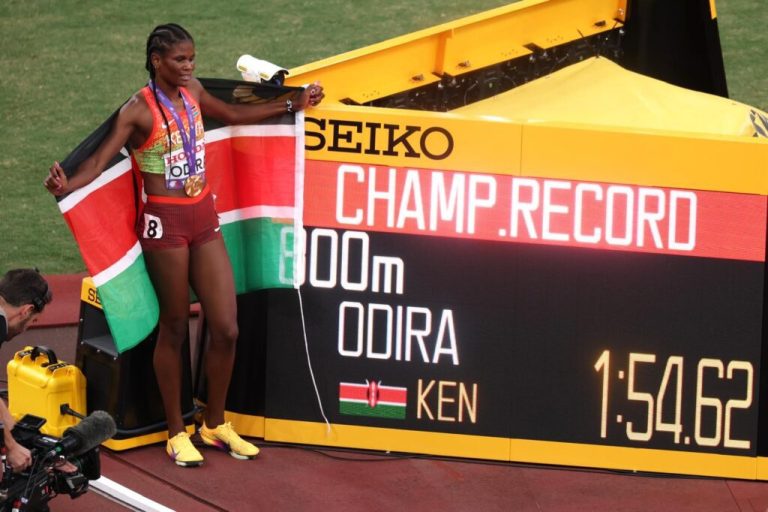
The 800m finals were the dream ending of Kenya’s mission. Emmanuel Wanyonyi was the male winner, and Lilian Odira gained the top spot in the female race through a record-breaking performance.
It was an unimaginable feat done by Kenya as they made history by being the first country ever to win all the distance races for both men and women at a single World Championships. Such a spectacular feat has gone a long way to further consolidate their reign as the home of distance running.
Botswana made a spectacular World Athletics Championships to be ranked fifth in the medal table overall. Such a moment of historic pride was really a milestone for a country with a relatively small athletics program.
By grabbing two golds, one silver, and one bronze medals, the Botswana team became the proof that African athletics is not just about the dominance of distance races. The country is now very much a sprinting force to be reckoned with.
It was a moment of firsts for Tanzania at the World Championships: a gold medal. Alphonce Felix Simbu went out and made a memory forever in the men’s marathon.
With a time of 2:09:48, Simbu beat Germany’s Amanal Petros by only three hundredths of a second-the closest winning margin ever in a world marathon. The difference between the two was even less than the one-second Ethiopian victory in Edmonton 2001 that is well-known.
For Tanzania, this gold was more than a medal. It was a testament that holding on and making gradual investments in long-distance running will eventually yield results on the biggest stage. Simbu’s victory is, therefore, likely to be the source of inspiration for the next generation of Tanzanian athletes who will be dreaming of global podiums.
Only a few years ago, Ethiopia was the continent’s first and only choice for distance running but at the World Championships, Ethiopia suffered its worst results in more than 30 years.
For the first time since 1991, Ethiopia had no gold medals at the World Championships. The great power that was once so obvious, made by the superstars like Haile Gebrselassie and Tirunesh Dibaba, was no longer there in Tokyo.
Experts have identified various issues in Ethiopia’s athletics system as the root cause of the failure including the excessive dependence on the already existing stars and the insufficient number of young athletes coming through the youth development programs. Tokyo 2025 might be the very moment when Ethiopia realizes that it has to start again if it wants to be at the top.
Nigeria ended up in 27th position on the medal table, amassing only one medal.
As Amusan’s performance is an assurance that keeps Nigeria in the spotlight of the global stage, the total number of medals is below the expected level. The upcoming challenge for Nigerian athletics will be to increase the medal potential beyond a single superstar.
Here is a brief overview of the medal count for countries in Africa:
The Africa World Athletics 2025 results reveal the following trends, which point to the future of the sport:
Africa’s athletics saga is that of both consistency and transformation with the next World Championships 2027 coming closer. The question is which countries will advertise their breakthroughs in Tokyo and which giants will stage comebacks?